When a port is dropped onto a swamp, it oozes
The boat tour of the Port of Melbourne was drawing to a close. I approached the tour guide, a retired port worker, to talk with him about the West Melbourne Swamp.
"It all used to be marsh land," he told me.
Looking at a map of the Port, we traced the original line of the Birrarung with our fingers.
"Can you still see any signs of the river? Even though it was filled in?" I asked.
"Oh no. There's too much going on there now. It's all covered over," he replied.
Let us, for argument's sake, take as given that it is all covered over.
Now, if one were to take a swamp and drop a port on it, what would happen? Logically, it would be like someone pressing their hand over a slab of tiramisu. The swamp would ooze out the sides.
The beauty of a boat tour of the Port of Melbourne is that it traverses the sides, where one can check for oozing swamp. On this excursion, that is exactly what I did.
This tour began at Victoria Dock and followed the Birrarung, taking a shortcut along the Coode Canal (thereby avoiding the filled-in part of the Birrarung) to rejoin the Birrarung and then enter the bay. We continued as far as the northern foreshore of Williamstown, then returned to Victora Dock the same way.
I stood at the bow and observed. I immediately saw evidence of swamp ooze. It's not even hiding. It clings to the concrete structures and takes root in the gaps between the port and the water.
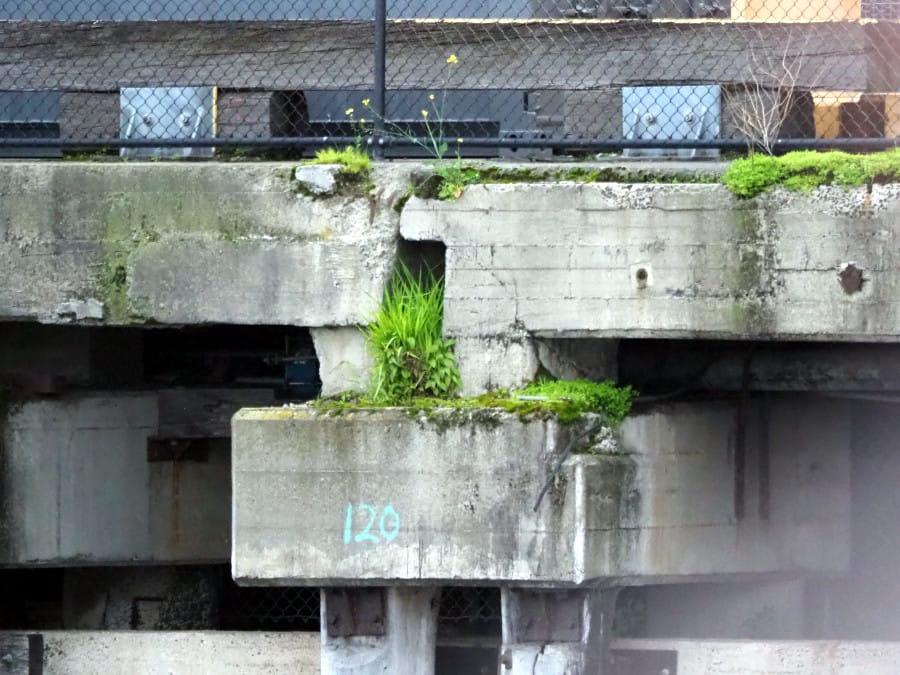
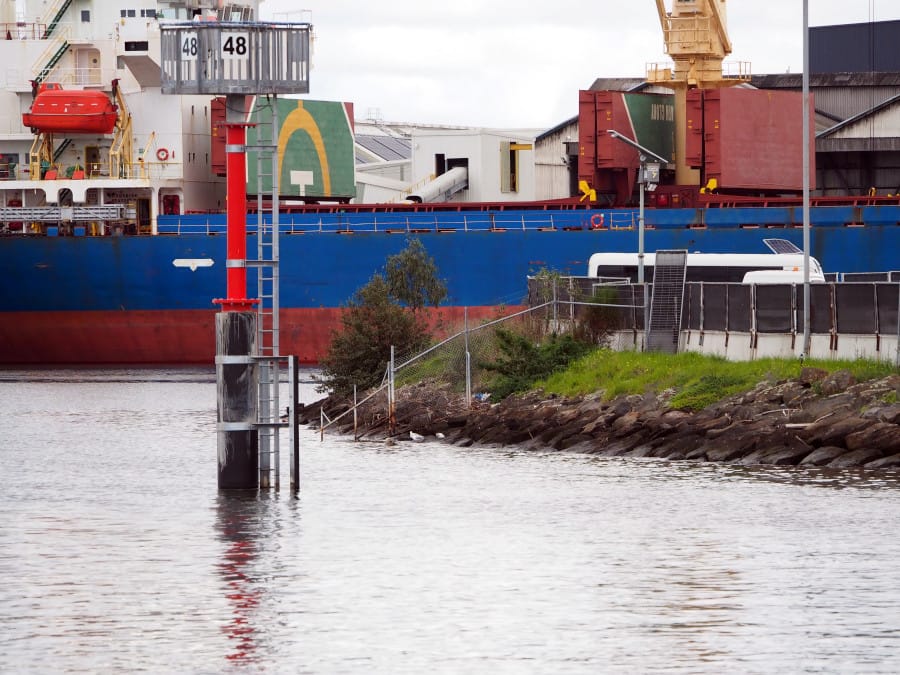
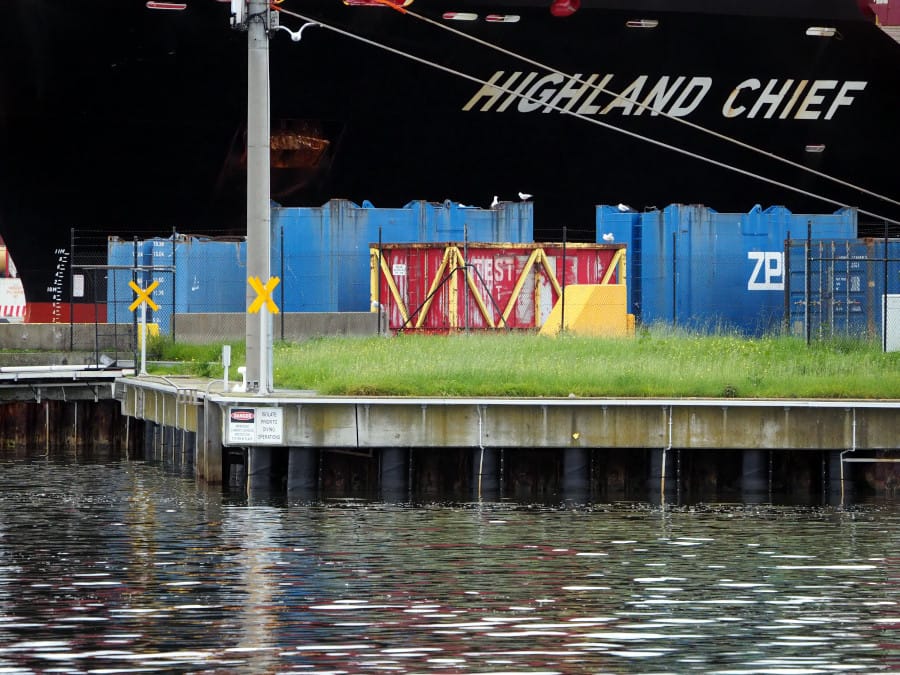
Swamp oozing out of the edges of the port.
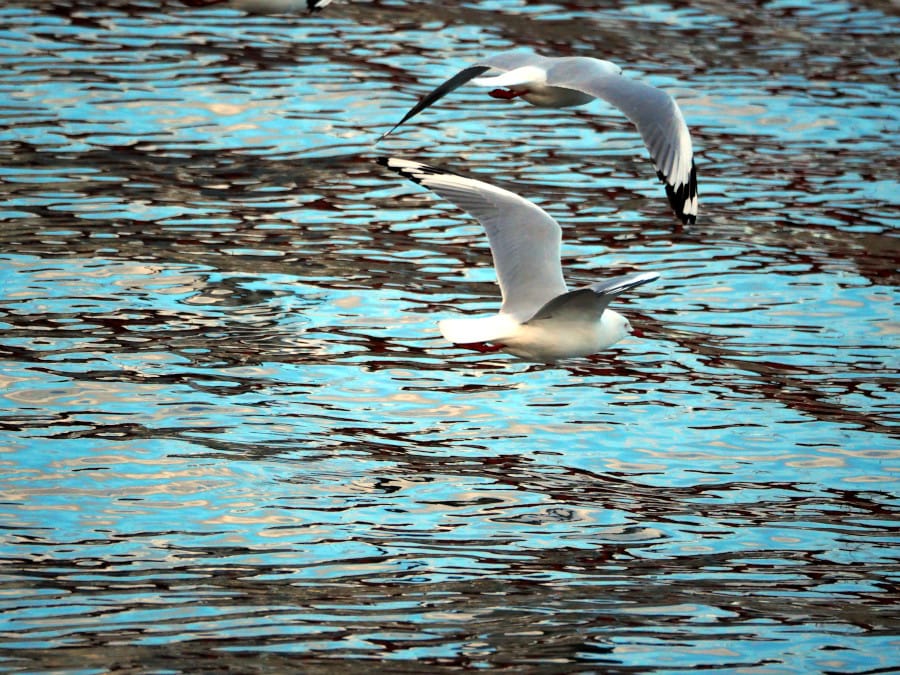
It became obvious is that birds are crucial to understanding the swamp, because they inhabit it even when it's not there (it is there). The cormorants hold their territory, laugh off the danger signs, and are assisted by constantly moving gulls.
The coots furtively work the culverts.
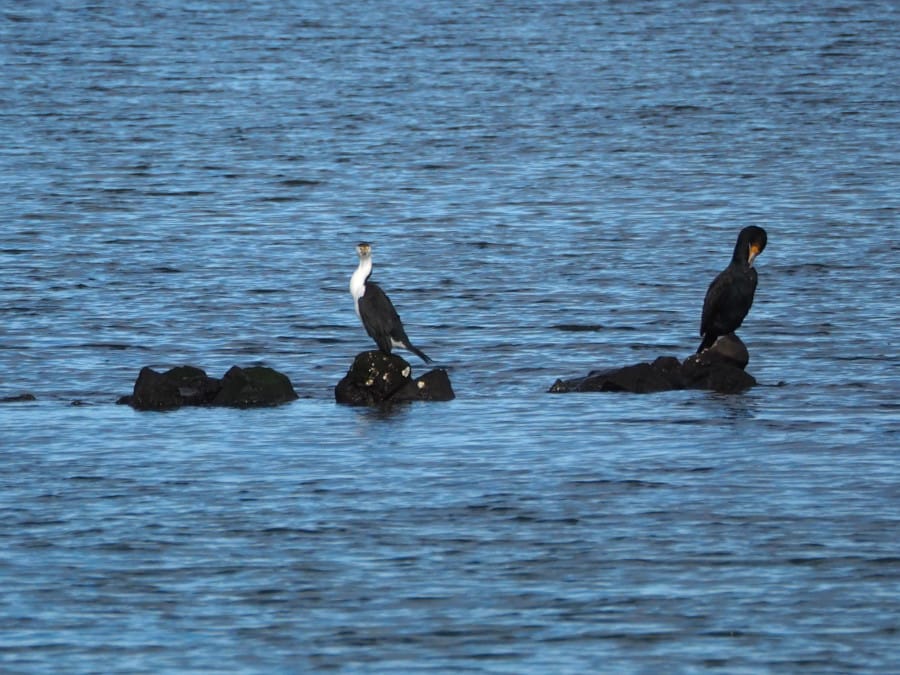
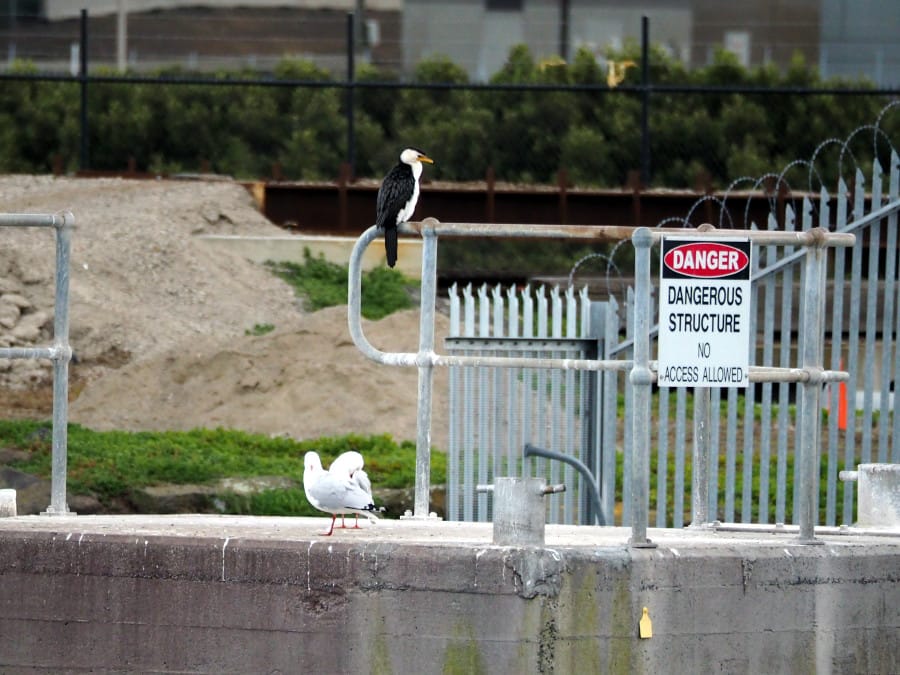
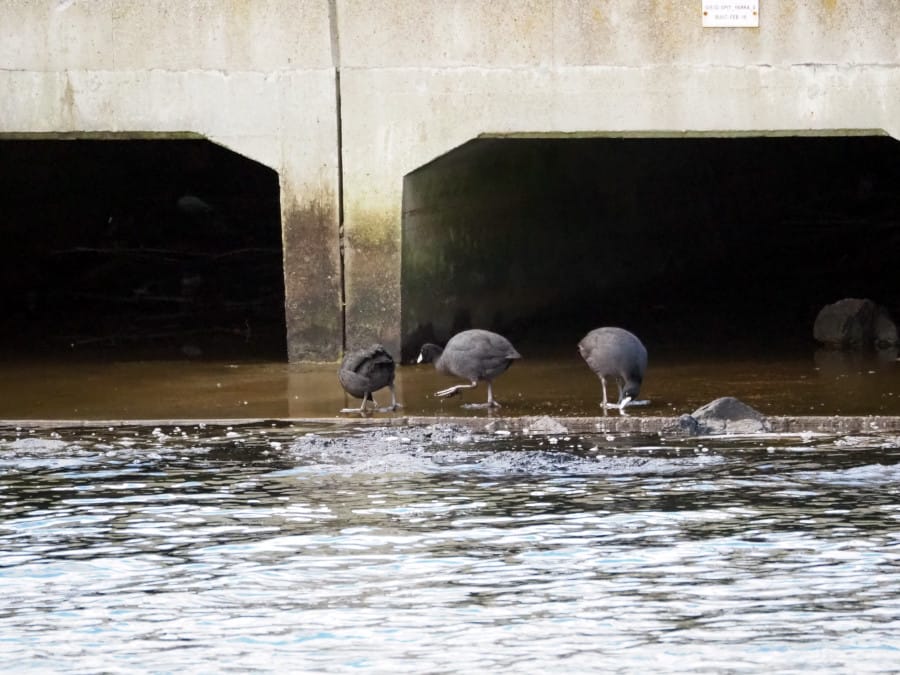
Cormorants, seagulls and coots.
One thing I have learned from this trip is to pay attention to the culverts. All culverts. It is normally possible to check where they go, something I will be looking into further.
Significantly, there is evidence of swamp return behind the dry/break bulk area next to Holden Dock. The land here is actually in Yarraville, but the water is part of the Coode Canal which means it is in fact swamp, where West Melbourne and Fisherman's Bend were once part of the same land mass. On this water, a single swan passed by, seemingly unperturbed by the industrial and port activities.
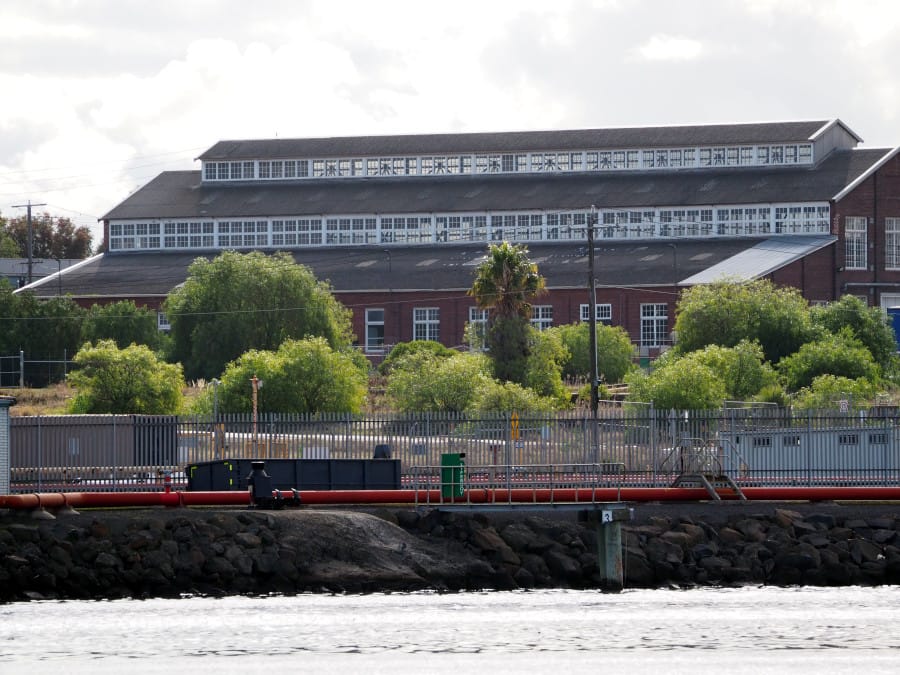
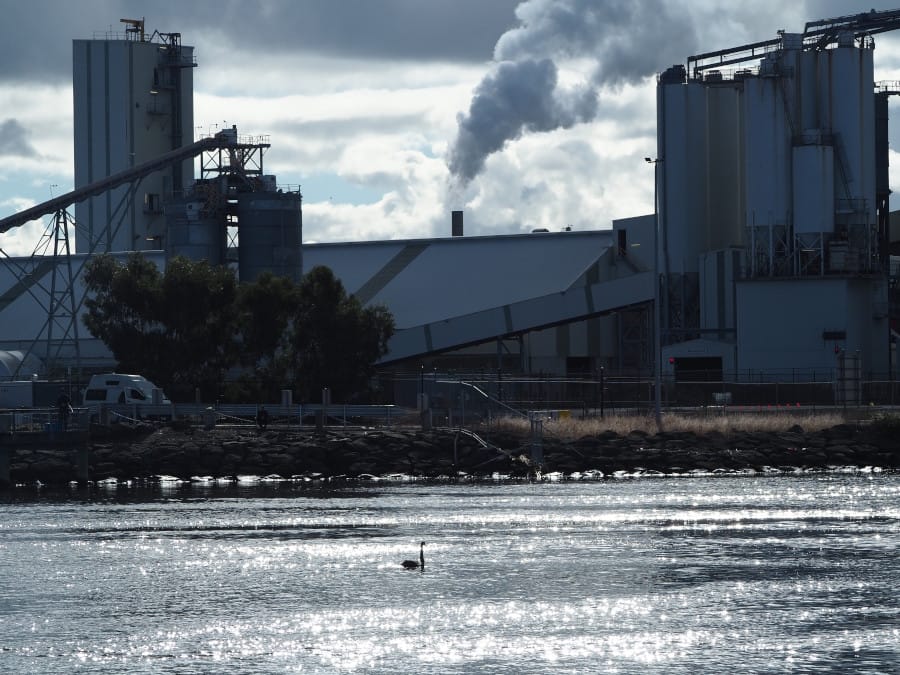
Swamp return is visible behind Holden Dock. A swan investigates.
On the western side of the Maribyrnong the bright green swamp ooze is obvious. This area is close to the West Gate Tunnel ("the wunnel") portal, an area of high psychogeographic interest that warrants further investigation (I have a long list).
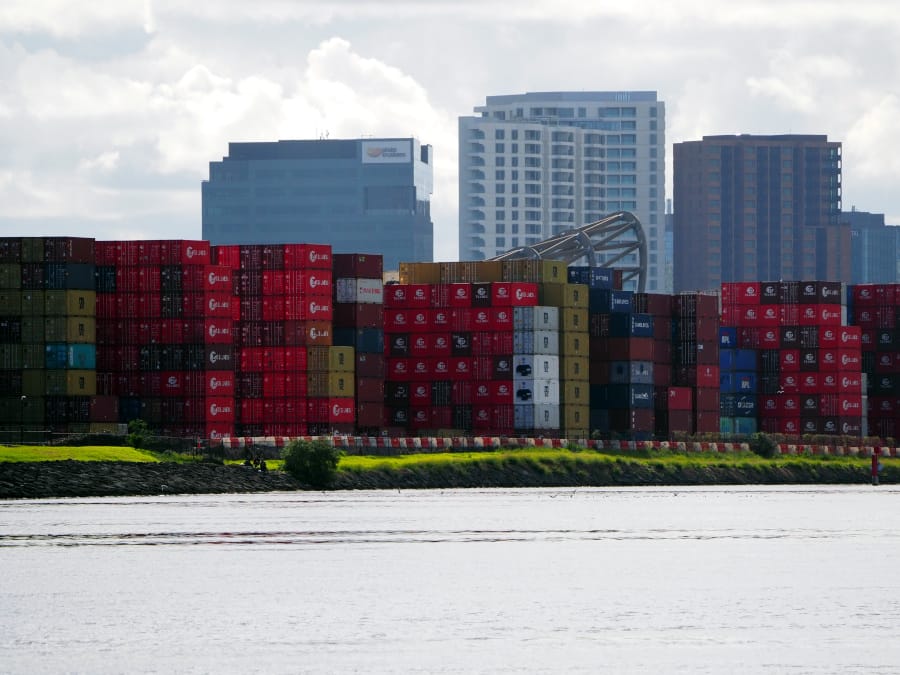
I strained to catch a glimpse of Moonee Ponds Creek, one of the most significant zones within the West Melbourne Swamp environs. It is one of the most swampy parts of the swamp. There were many fishers here but I have chosen not to publish their photographs.
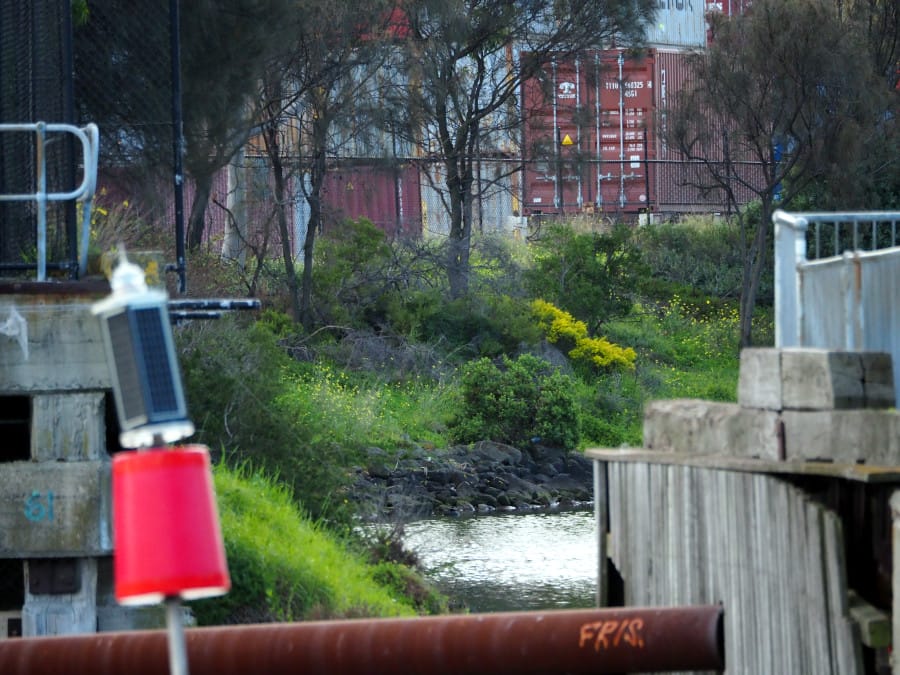
Nearing our return to Victoria Dock, a final reminder that even if more rubble is piled upon the swamp ooze, it just keeps oozing.
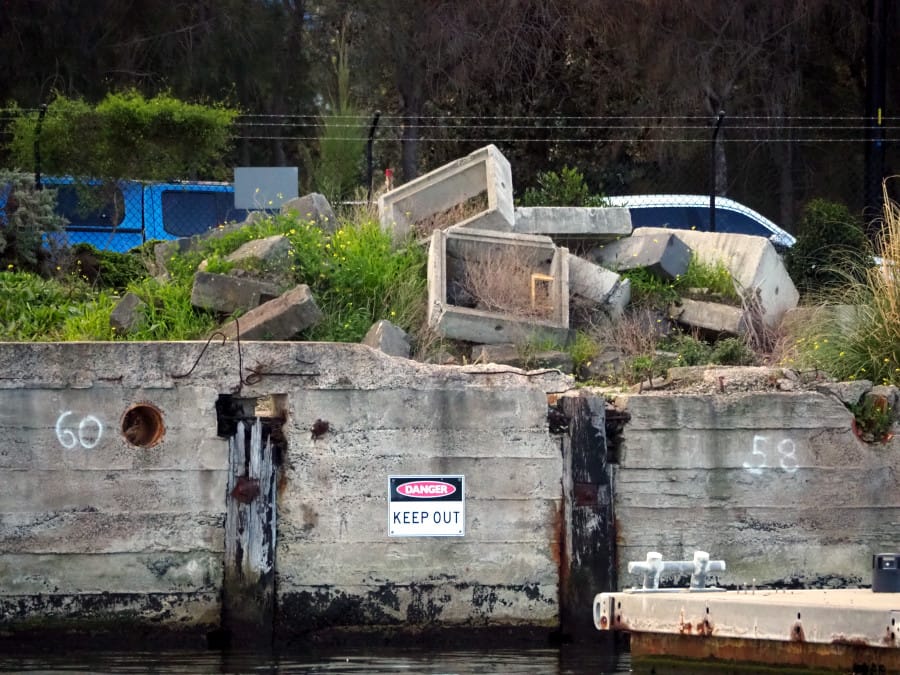
Ideally the tour would have taken us into the guts of the swamp, right into the container city of Swanson Dock East, or even onshore to walk around the liquid bulk area of Coode Island, giddy at the prospect of being at ground zero of the big kaboom. Maybe even being present for another one.
We can't take as given the tour guide's belief that "it's all covered over." We can see that it is oozing out the sides. Surely it is also creeping upwards through the bitumen and concrete hard stand. After all, some mushrooms and weeds are powerful enough to break through pavement.
Despite working in the Port—the swamp—for decades, is it possible that our tour guide simply did not notice?