In the court of the bin chickens
I made this excursion several months ago, but I wasn't ready to document it until now.
The wildlife sanctuary, as it is called on maps, sits wedged between Boral Concrete and the Citywide Resource Recovery Centre & Waste Transfer Station on Dynon Road. It is the most obstinate section of the Dynon Road Tidal Canal (which is a feature warranting its own thorough investigation in future).
This area won't fold in on itself any further. That's what I mean by obstinate. Whereas the rest of the Tidal Canal has proved ductile and been narrowed, elongated and hidden behind trees and under bitumen, here it spreads out, as if its contents had been squeezed to the head of the toothpaste tube and got stuck in the corners before they could ooze out of the cap.
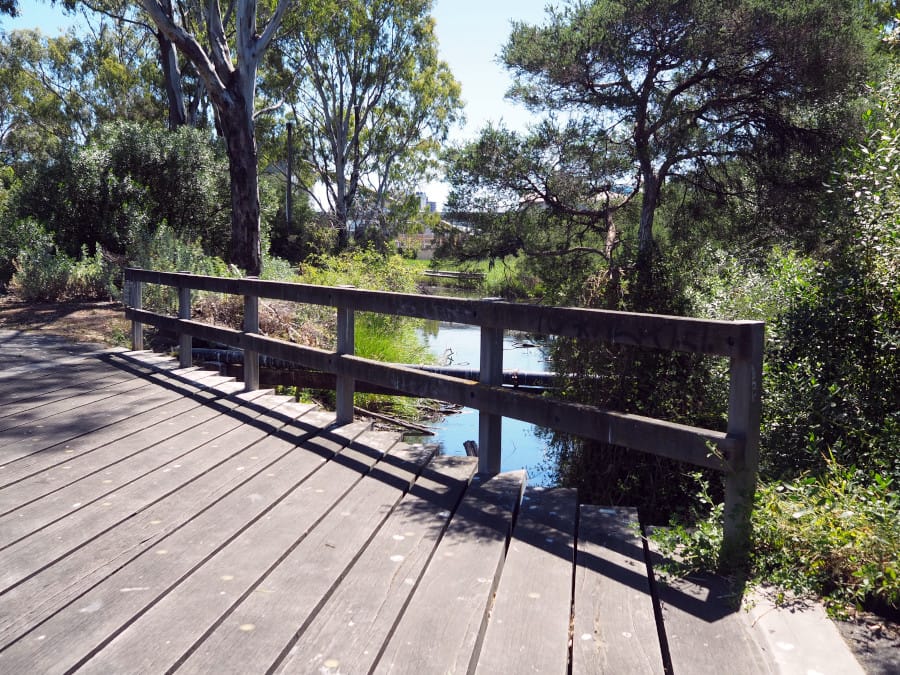
The way into the... into this area is via a wooden bridge which gives the feeling of a portal, or a crossing over. Once inside, one's senses are forcibly broadened: it's shady and cool. Also: it's noisy and it smells. Because it's between a tip and a concrete factory. It's not nice.
I didn't make this excursion alone. The truth is, I am too scared to enter this area alone, even in broad daylight. My companion and I laid our bicycles down after the path ended, they sank deep into the grass, and we walked around.
It does not take long to realise you're surrounded. Ibis line the top of the Citywide facility and they nest by the dozen in the tall trees. They fly around the silos and the conveyor belt at the concrete works. There are a lot of ibis. Many of these will be the same ones people see in places like the city parks and along the Maribyrnong and Birrarung. But this really feels like their place.
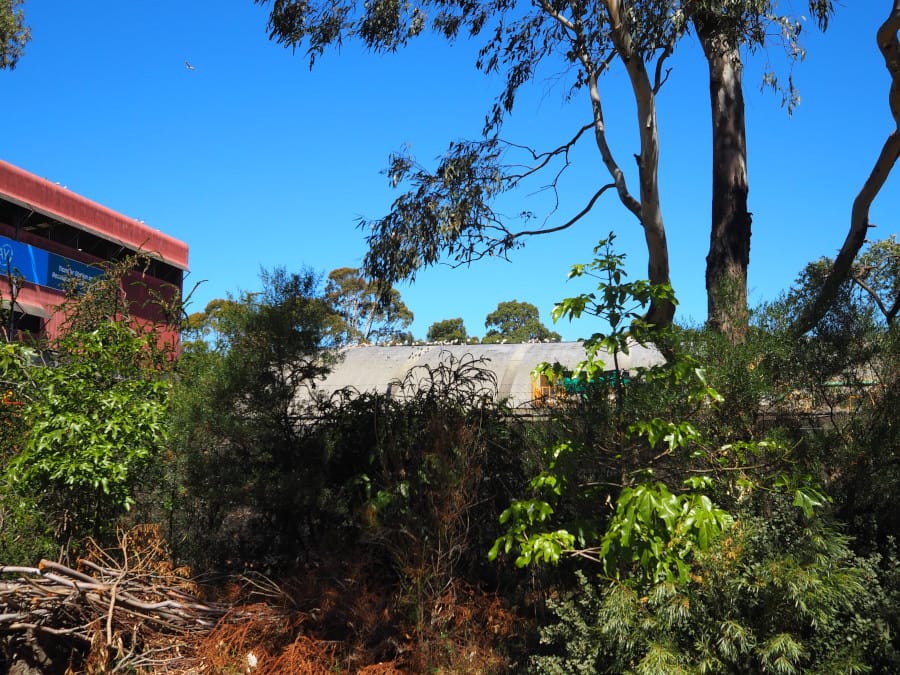
My hesitancy to call this a sanctuary is rooted in the realisation that this is not my sanctuary. It's theirs. It's the kingdom of the bin chickens and here we are, stepping in uninvited.
We walk around, noting the birdwatching platform that the City of Melbourne has optimistically installed along the creek (the Canal, but here it feels like a creek). I suppose council have to spend at least some of their parks and gardens budget in West Melbourne and I wonder how the council officers feel about that. Maybe they are fiercely protective of this final folded-in holdout in postcode 3003, and they know that it's not really theirs but they'll never let the bosses take its funding away.
If you work in the City of Melbourne's parks and gardens department (at an officer level), please get in touch.
At one point, my companion disappeared behind a copse. I could only stand there waiting helplessly for them to return to my sight. It felt as though I would never see them again. They came back.
We went in further, encountering a circle of bluestone and gnarled trunks, arranged in a deliberate and unnatural formation. What had happened here and who did it? What was their business?
This place is terrifying.
Further in still, a neatly arranged pile of cut branches that defied reasonable explanation.
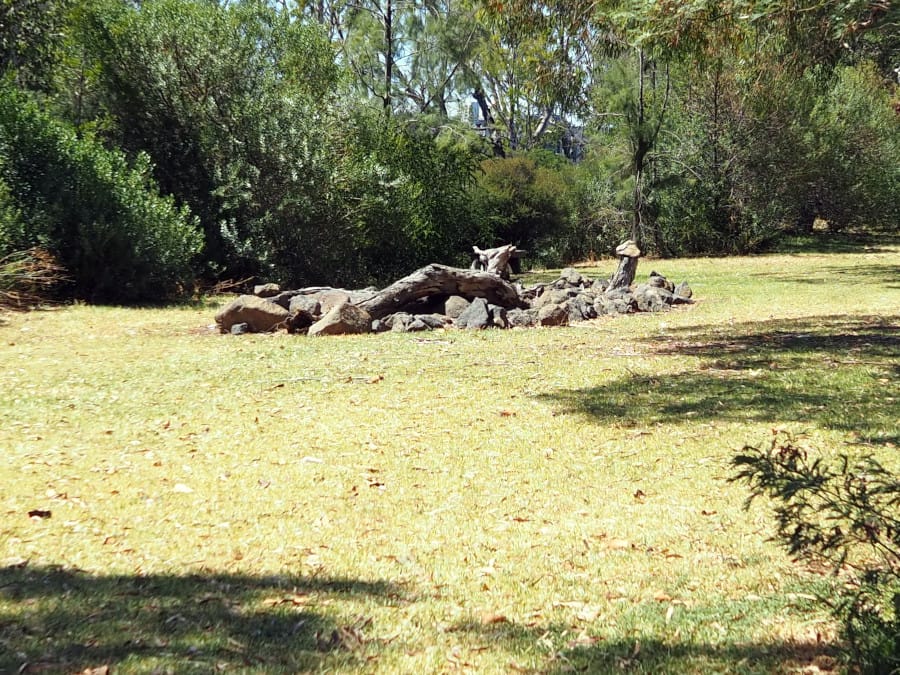
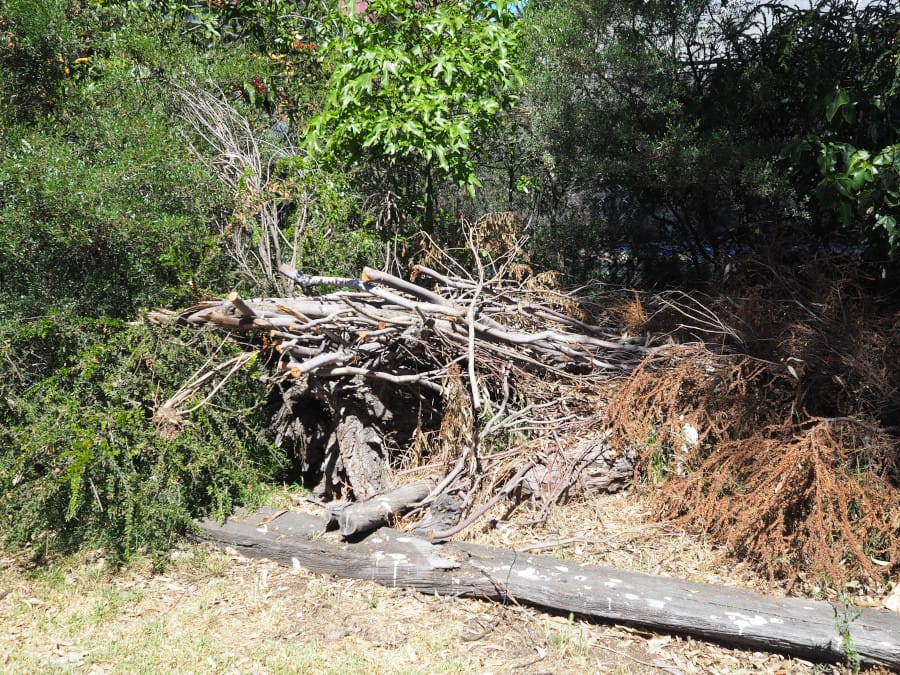
The circle; the pile.
It was at this point we interrupted our own recollections of The Blair Witch Project (the original not the remake) with the dawning realisation that this place is free of litter.
It is right next to a tip—they share a chain-link fence—and there is no litter.
There is litter on the shores of Antarctica and in the middle of every ocean. There is litter in space and on the highest peaks of Earth. Loads of it. But not here.
It's clear we weren't properly prepared for this excursion. I know we—I—need to return if I aim to coax it further. I don't know when. This all happened half a year ago already. I haven't been back.